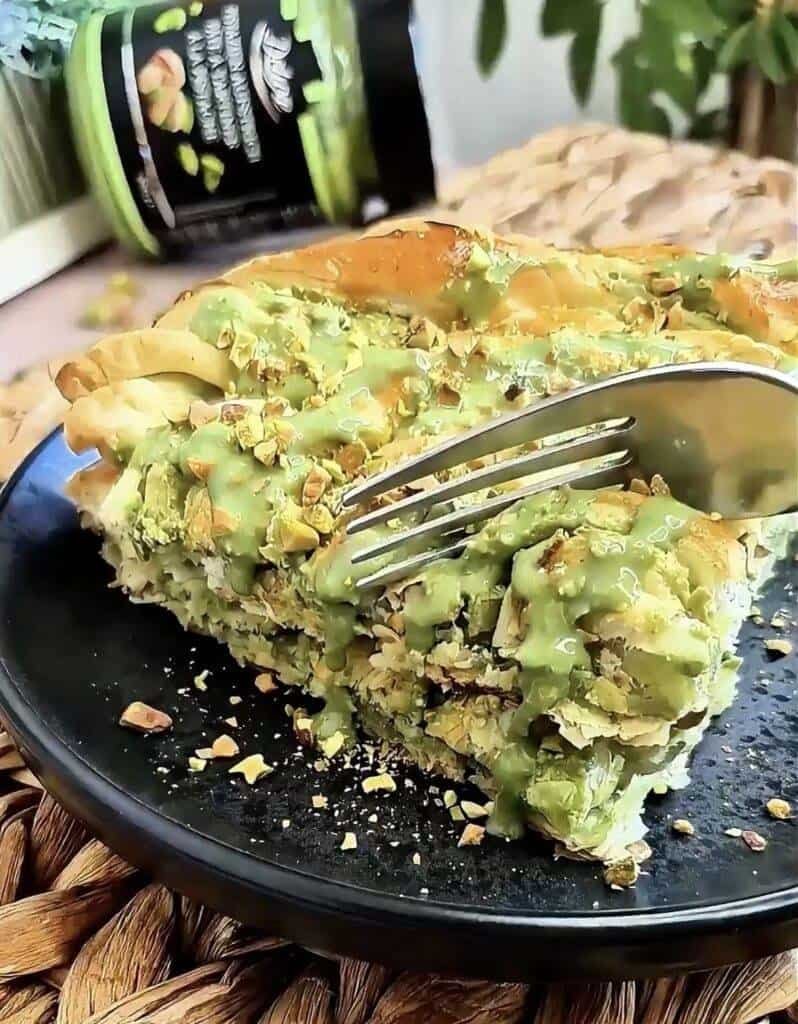

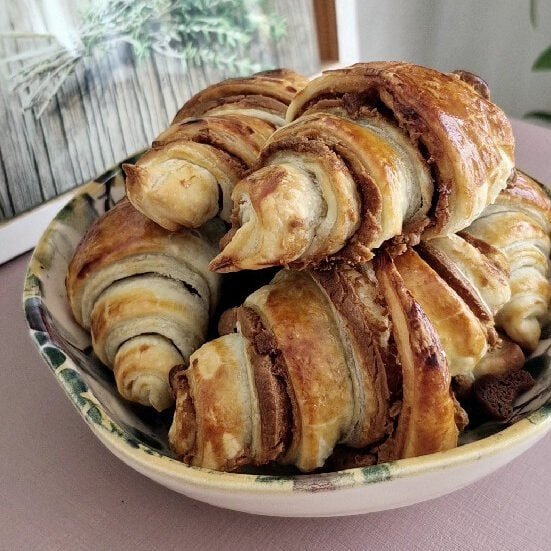
I love recipes that look like you’ve spent hours on them, but actually come together in a very normal amount of time. These Lotus Biscoff croissants are exactly that. They’re flaky, golden, and filled with that caramel-spiced Biscoff flavor that somehow makes everything taste like it belongs next to a coffee.
This is not a “perfect patisserie” croissant situation (I’m not laminating dough for three days over here). This is the easy version using puff pastry, and honestly, I make these when I want something warm and impressive without making a whole mess of the kitchen. If you’ve got two sheets of puff pastry and a jar of Biscoff spread, you’re basically already there.

What you’ll get from this recipe
- Crispy, flaky layers from puff pastry
- A gooey Biscoff center that melts while baking
- Extra crunch from crushed Lotus biscuits inside
- A shiny golden top thanks to egg yolk
They’re best on the day they’re baked (like most flaky pastries), but I’ll share a couple of ways to keep them nice if you’re making them ahead.
Ingredients (and why each one matters)
Puff pastry (2 sheets)
This is your shortcut to flaky layers without making laminated dough from scratch. Use ready-rolled sheets if you can—less work, more consistent thickness. If your pastry comes in blocks, just roll it out into two even rectangles.
Tip: Puff pastry works best when it’s cold. If it gets warm and floppy, it’s harder to cut and roll neatly.
Biscoff spread (2–3 tablespoons)
This is the filling, and it’s doing most of the heavy lifting flavor-wise. Two tablespoons gives a lighter filling, three makes it richer.
Important note: Don’t overdo it. Too much spread can leak out and burn on the tray (still edible… but messy).
Lotus biscuits, crushed (2–3 biscuits)
This adds texture and boosts the Biscoff flavor without making the filling too wet. I like to crush them so you still get small bits rather than fine dust.
Egg yolk (1)
Brushing the tops with yolk gives that bakery-style shine and a deeper golden color. If you only have a whole egg, you can use it, but yolk alone looks more glossy.
Baking temperature
200°C (392°F) for 15–20 minutes.
Ovens vary, so start checking around 15 minutes. You want them deep golden and visibly puffed.
Equipment you’ll need
- Baking tray
- Baking paper (recommended—Biscoff can leak)
- Sharp knife or pizza cutter
- Small bowl + brush for egg yolk
- Spoon/spatula for spreading
Step-by-step: How to make Lotus Biscoff Croissants
1) Prep your tray and oven
- Preheat the oven to 200°C.
- Line a baking tray with baking paper.
This step seems boring, but it matters—puff pastry needs a properly hot oven to puff quickly, and the baking paper saves you from scrubbing caramelized Biscoff off the tray later.
2) Set up the puff pastry
Lay the first sheet of puff pastry on a clean surface. If it’s very cold and stiff, let it sit for 2–3 minutes—just enough to be workable but still cool.
3) Spread the Biscoff
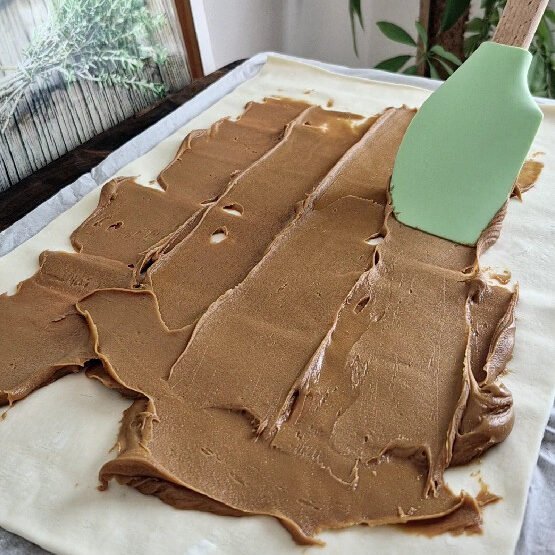
Using a spoon or small spatula, spread 2–3 tablespoons of Biscoff spread over the first sheet.
How thick?
Think “thin and even.” You’re aiming for coverage, not a thick layer. Leave a small border around the edges (about 1 cm) so it seals better once the second sheet goes on.
4) Add the crushed biscuits
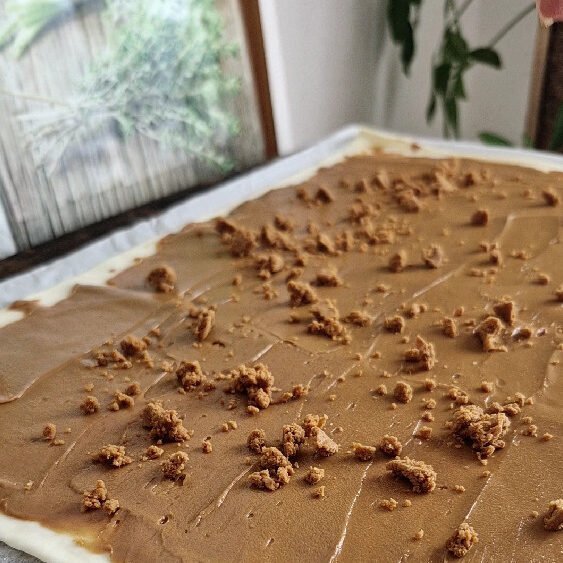
Sprinkle crushed Lotus biscuits over the spread. I go heavier toward the middle and a little lighter near the edges.
Crushing tip:
Put biscuits in a zip bag and crush with a rolling pin. Stop when you’ve got small chunks plus crumbs—those little chunks are the best part.
5) Add the second sheet and gently press
Place the second sheet of puff pastry on top, lining up the edges as best you can. Then gently press all over with your hands to help everything stick together.
You don’t need to squash it flat—just enough so the layers bond and don’t slide around when you cut.
6) Cut into triangles
Now cut the layered pastry into triangles. The size is up to you:
- Bigger triangles = bigger croissants
- Smaller triangles = more croissants
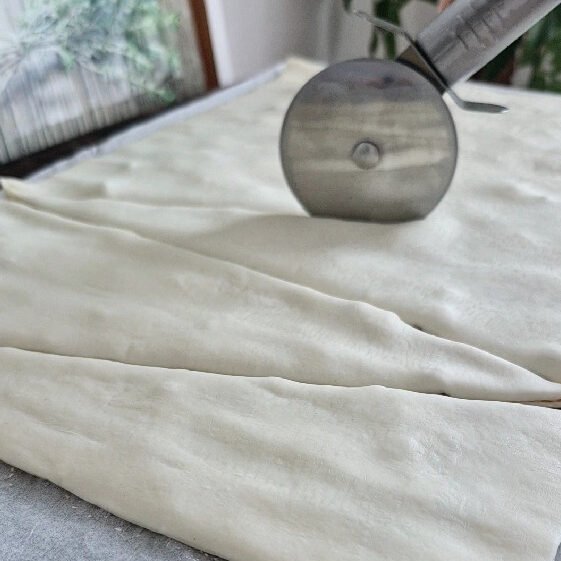
If your pastry is a rectangle, an easy method is:
- Cut it into long strips.
- Cut each strip diagonally to form triangles.
Try to keep them similar in size so they bake evenly.
7) Roll into croissant shapes
Take one triangle and start rolling from the wide end toward the point. Roll snugly, but don’t stretch the pastry too much. Tuck the tip underneath at the end so it doesn’t pop up while baking.
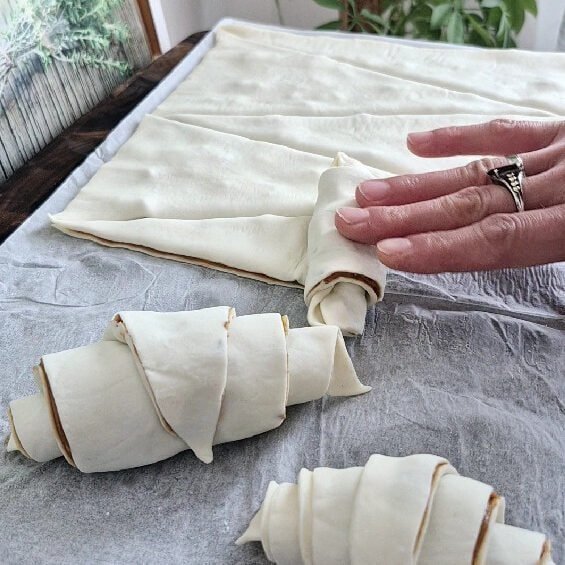
If you want the classic croissant curve, gently bend the ends inward once it’s rolled.
8) Brush with egg yolk
Place the croissants on the tray with space between them—puff pastry expands a lot.
Beat 1 egg yolk in a small bowl (you can add a tiny splash of water if it’s super thick), then brush the tops lightly.
Try not to brush the cut sides too much—egg wash on the sides can sometimes “seal” the layers and reduce puff. Not a disaster, but brushing mostly on top gives the best rise.
9) Bake
Bake at 200°C for 15–20 minutes.
At 15 minutes, check:
- Are they puffed up and clearly layered?
- Are they turning golden?
If they’re still pale, give them a few more minutes. I usually pull them when they’re properly golden, not just lightly colored.
10) Cool (just a little) before eating
Let them sit for 5–10 minutes. The filling is extremely hot right out of the oven, and puff pastry sets as it cools slightly—so you get a crispier bite.
Tips that actually help (from making these more than once)
Keep the pastry cold
If the pastry gets warm, it becomes sticky and hard to shape. If your kitchen is warm, pop the assembled pastry sandwich into the fridge for 10 minutes before cutting.
Don’t overload the spread
More filling sounds better in theory, but too much Biscoff will leak out and burn. Stick to the 2–3 tablespoon range for this method.
Use baking paper
Leaking happens. Baking paper turns cleanup into a non-issue.
Watch the bottom
If your oven runs hot underneath, place the tray in the middle (not too low). You want the bottoms cooked and crisp, not too dark.
Want extra crunch on top?
After egg wash, sprinkle a tiny bit of crushed Lotus biscuit on top of each croissant. Just a little—too much can burn.
Variations (if you want to change it up later)
- Extra Biscoff center: Add a small additional smear on the wide end of each triangle before rolling (but be careful—this increases leakage risk).
- Chocolate version: Add a few chocolate chips with the crushed biscuits.
- “Dessert plate” style: Serve warm with a spoon of whipped cream or vanilla ice cream (especially if you’re making these for guests).
Storage and reheating
These are best the same day, but you can absolutely store leftovers.
- Room temp: 1 day, in a container (they’ll soften a bit).
- Fridge: 2–3 days, but they lose crispness.
To re-crisp:
Bake or air-fry at 160–170°C for 5–8 minutes until warm and flaky again. Avoid the microwave if you want them crisp (it makes pastry soft).
Recipe Card: Lotus Biscoff Croissants
Prep Time: 10–15 minutes
Bake Time: 15–20 minutes
Oven: 200°C
Yield: Depends on triangle size (usually 6–10)
Ingredients
- 2 sheets puff pastry
- 2–3 tablespoons Biscoff spread
- 2–3 Lotus biscuits, crushed
- 1 egg yolk
Instructions
- Preheat oven to 200°C. Line a baking tray with baking paper.
- Lay the first puff pastry sheet flat. Spread Biscoff spread evenly over it, leaving a small border.
- Sprinkle crushed Lotus biscuits over the spread.
- Place the second puff pastry sheet on top and gently press to seal.
- Cut into triangles.
- Roll each triangle from the wide end to the tip to form croissant shapes. Place on the tray.
- Brush the tops with egg yolk.
- Bake for 15–20 minutes until puffed and golden. Cool 5–10 minutes before serving.
Notes
- Keep pastry cold for cleaner cutting and better layers.
- Don’t overfill—too much spread will leak out and burn.
- Reheat in oven/air fryer for best crispness.